What is predatory UX Design?
User experience design (UX) is a subset of graphic design that plans the way people interact with websites, apps or other software. It asks questions like: where should “the big button” be, or how will people find “the cart”, or how hard should it be to cancel a subscription?
UX design can be optimized for different goals. You could create a design that maximizes ease of use. You could maximize for efficient operation (in the case of a tool). Or you could maximize for profit.
“Predatory UX design” is a phrase I’m using to refer to deliberate design choices a company makes in order to maximize profit in a way that is detrimental to the wellbeing, agency, time, or attention of real people.
Researcher Cory Doctrow would likely lump predatory UX design under his enshittification theory, that companies are not actively trying to be evil, but rather are incentivized by a lack of regulation and VC funding to make worse products.
Venial sins of UX design
Have you ever struggled to cancel your Netflix subscription? That’s predatory UX design. Subscription services purposely place their cancel buttons in difficult to find locations. While I don’t like it, this design choice kind of makes sense to me. I don’t think it falls in the category of a mortal internet sin.
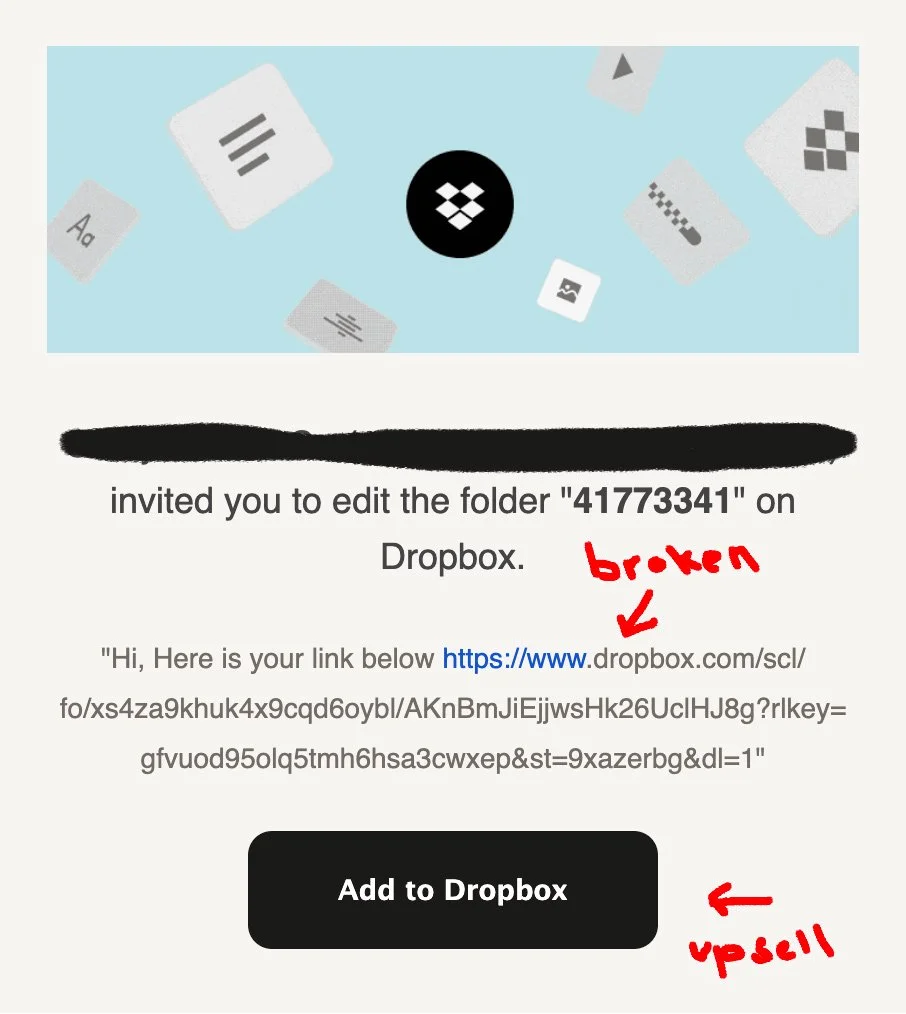
But other design choices are more insidious. Here’s an example from Dropbox. A local company in my community used Dropbox to deliver film scans to me. In the delivery email the actual file sharing service (that the local company and I paid for) is small and broken, but Dropbox’s upsell is positioned as the primary decision for the user to make.
Mortal sins of UX design
In this video we see a mortal sin of predatory UX design. Shopify traps both the seller and the buyer. In order to get a simple tracking number the customer has to sign up for a third-party app that will likely sell their personal information, or use it for ad targeting or data analytics. There’s no easy way to opt-out and still get your tracking number.
Ethics of UX design
UX design is extremely important and it affects the lives of millions (if not billions) of people. For this reason companies and designers have a responsibility to think about ethics in their design, even if that reduces their profit by 1%. Perhaps the first step to solving this would be antitrust regulation. When companies can get away with predatory UX design like this, it probably means they are operating near monopoly.